Company News
Market Volatility: Why Now is the Best Time to Secure Your Carbon and Galvanized Steel Supply?
2026.04.23



Source:View:
For international steel service centers and high-volume distributors, procuring galvanized steel coil inventory is an important exercise in capital allocation.
When importing large volumes of steel across oceans, looking only at the "Ex-Works" or "FOB price per ton" can lead to unexpected secondary expenses. True profitability is often determined by the Total Cost of Ownership (TCO), which includes transit insurance, yield loss during slitting, claims for surface defects, and the cost of capital tied up in slow-moving inventory.
This guide provides a commercial framework for evaluating galvanized steel coil suppliers, focusing on how technical precision directly translates to healthier balance sheets.
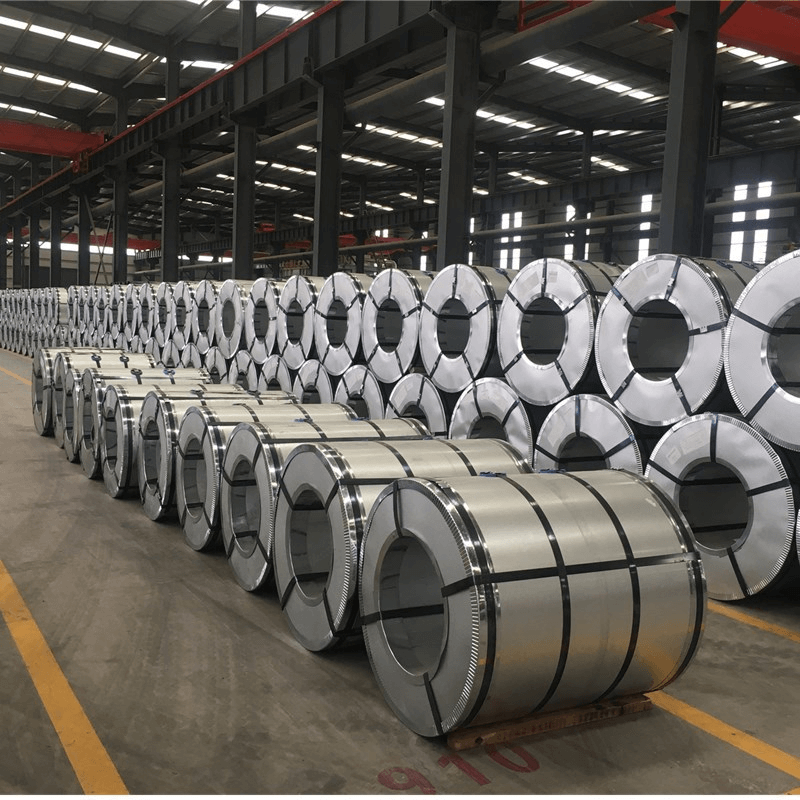
In the bulk steel trade, minor savings on lower-cost ocean freight or standard packaging can lead to financial write-downs upon arrival. A primary culprit is wet storage stain, commonly known as white rust.
The Financial Impact: If a container of galvanized steel coil stock arrives with notable white rust, the material often cannot be sold as prime grade. Scrappage or downgrading to secondary stock typically results in a measurable loss in asset value per affected coil.
The Margin Protection Strategy: To mitigate this, financial directors regularly budget for advanced chemical preservation. Ensuring your supplier uses a combination of trivalent chromium ($Cr^{3+}$) passivation and a protective electrostatic oil coating acts as a practical safeguard.
The Packaging ROI: While heavy-duty, multi-layer export packaging (including VCI moisture-barrier paper, steel outer casings, and robust wood-skid mounting) adds a minor premium per ton, it significantly reduces the risk of cargo rejection, protecting your downstream cash flow.
For service centers that process galvanized steel coil into sheets or slit bands, machine uptime is central to profitability. Sourcing coils that have not undergone proper tension leveling at the mill can introduce unexpected manufacturing downtime.
| Technical Variable | Operational Symptom | Financial Consequence |
| High Residual Stress | Edge-wave and center buckle during slitting | Machine stoppage, tool wear, rejected finished parts |
| Brittle Zinc Alloy Layer | Zinc flaking and peeling during deep-drawing | Increased stamping die wear, higher component rejection rates |
| Inconsistent Gauge/Thickness | Deviations exceeding half-tolerances | Inconsistent welding quality, customer feedback |
By sourcing galvanized steel coil processed through modern inline tension levelers, you help ensure the steel remains consistently flat during high-speed processing. This technical consistency reduces scrap rates, saves wear on stamping dies, and helps stabilize your daily processing throughput.
Entering a market or bidding on infrastructure projects requires strict regulatory compliance. Sourcing uncertified galvanized steel coil stock limits your market reach and exposes your business to commercial liability.
Standard Alignment: A reliable partner must supply material that strictly complies with recognized international standards, such as ASTM A653 or EN 10346.
The Cost of Non-Compliance: If a structure degrades prematurely due to substandard zinc thickness (e.g., receiving Z100 instead of the contracted Z275/G90), the distributor faces claims that can exceed the original purchase value.
MTC Traceability: Every reliable galvanized steel coil shipment is accompanied by a comprehensive Material Test Certificate (MTC EN 10204 3.1). This document traces the mechanical properties and chemical heat numbers back to the raw steel stage, acting as a key document for quality disputes and customs clearance.
In a volatile global market, highly successful stocking distributors generally do not buy from the cheapest mill; they buy from the supplier that minimizes operational variables.
By investing in galvanized steel coil products that feature verified standard compliance, advanced rust prevention, and stress-relieved flatness, you protect your processing machinery, safeguard your customer relationships, and secure a predictable return on your working capital.

Cookies help us serve you better. By using this site, you agree to use cookies.We will not store any of your personal information. (Do not display cookies)